Computer-aided methods have been widely used in drug discovery processes [[1], [2], [3], [4], [5], [6]]. Fragment-based drug design (FBDD) utilizes small molecules or fragments (molecular weight <300 gmol-1), to design a lead compound. Identified fragments can be grown, linked, or merged into a more potent lead molecule [[7], [8], [9], [10], [11]]. However, fragment libraries are very large, and the number of fragment combinations and their orientations in the generation of novel ligands is combinatorically explosive [12]. As a result, FBDD remains a challenge, since the space for identifying effective drug candidates is still very large, and finding candidates that are both feasible (drug-like) and have high binding affinity to the target is a difficult task.
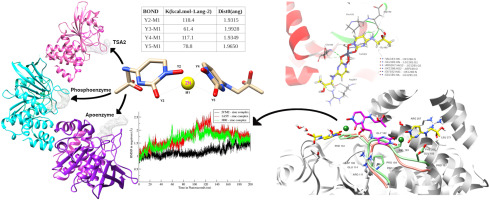
We report a new fragment-based method: creating a fragment database from a large, already docked, ligand screening library for a specific target, in which fragments are associated with information from the parent ligand. We term the method Fragments from Ligands Drug Design (FDSL-DD) as shown in Scheme 1. At a high level, a large number of “drug like” ligands are screened with computational docking software to 1) obtain the predicted binding affinity between each of the ligands and the protein targets and 2) where and how (i.e., what chemical bonds at what atoms) the ligand binds with the protein. After these screening and profiling steps, the ligands are computationally “fragmentized” (virtually broken up into fragments) (Scheme 1). A database is then created which includes, for each fragment, summary statistics for the binding affinity of parent ligands and protein-ligand bond profiling data from the screening step. We may then utilize the resulting fragment database to design drug candidates in silico (Fig. 1).
To demonstrate the potential of the created fragment library and FDSL-DD, three different protein targets have been chosen, each with substantially different chemical and structural characteristics. The first, tumor necrosis factor alpha induced protein 8-like 2 (TIPE2), is a transport protein that can induce leukocyte polarization, sustaining chronic inflammation and ultimately supporting tumorigenesis [13,14]. Inhibition of TIPE2 would provide a therapeutic option for solid tumor cancers. The second, RelA, a protein that detects amino acid starvation activating the stringent response in bacteria which leads to persister cell formation. Persister cells can withstand 1000 times the antibiotic concentrations of their normal cell counterparts [15], so inhibit RelA and antibiotics can be used to eradicate the bacteria, and mostly importantly bacterial biofilms. The final protein utilized in this study, is the receptor binding domain (RBD) of the S1 subunit of the spike protein (S-protein) of severe acute respiratory syndrome coronavirus 2 (SARS-CoV-2). The S-protein RBD binds to human angiotensin‐converting enzyme (ACE-2), facilitating viral entry [16]. It is noteworthy that our selection of the three proteins was not arbitrary; rather, we deliberately chose three ongoing projects in our lab. Over the years, both our research group and several others have failed in identifying potent inhibitors for these proteins, except for the S-protein, using conventional drug discovery methods. However, with the introduction of the innovative FDSL-DD approach, we have achieved promising and unprecedented results that were previously unattainable.

Comments (0)